
How to Find a Good Chinese Tour Open to Partnership?
If you are looking in 2025, then it is no secret for you that Chinese outbound tourism is an incredible opportunity for your business BUT it is not easy.
You’ve probably tried to contact Chinese tour operators, maybe you even tried to promote your services to Chinese travelers but with no success so far.
Don’t worry, that is normal, China tourism is a very specific market with its own internet, marketing tools, and consumer habits. So let’s deep dive into it and see how you can reach out to Chinese tourists!

Understand Chinese Tourists 2025
The Chinese tourist market exhibits diversity across age groups, income brackets, and preferences. However, there is a common thread of interest among them, including a strong attraction to popular travel destinations, a penchant for mobile payments, and active engagement with Chinese social media platforms.
Here are the 5 key things tour operators need to know about Chinese tourists in 2025, based on the latest trends and data:
1. Spontaneous, Last-Minute Bookings Dominate
- 76% of Chinese travelers now book trips less than a month before departure, with 46% booking just two weeks in advance .
- High-net-worth individuals are equally spontaneous, with 70% booking within a month 1.
- Implication for operators: Offer flexible cancellation policies, last-minute deals, and real-time mobile booking options to capture this demand.
2. Luxury and “Value-Conscious” Preferences
- 67% prefer 4-star hotels or higher, and 49% plan to spend over 25,000 RMB ($3,500) per trip .
- Tier 1 city travelers drive premium demand, prioritizing “affordable luxury” (e.g., high-end experiences at competitive prices) .
- Implication: Curate luxury-lite packages (e.g., boutique hotels, exclusive cultural tours) and highlight cost transparency to appeal to value-sensitive yet aspirational travelers.
3. Social Media Dictates Travel Choices

- Xiaohongshu (RedNotes) and Douyin (TikTok) are the top platforms for inspiration, especially for Chinese travelers
- 94% of travelers share experiences online, making user-generated content (UGC) critical for credibility .
- Implication: Partner with KOLs (influencers) and invest in short-form video marketing. Optimize listings for social search (e.g., hashtags like #JapanCherryBlossoms).
4. Safety and Visa Policies Shape Destinations
- Safety is the top concern, with Southeast Asia (Thailand, Vietnam) losing favor due to crime fears, while Japan, Singapore, and Europe gain traction .
- Visa-free destinations (e.g., UAE, Saudi Arabia, Central Asia) are surging in popularity .
- Implication: Promote destinations with strong safety records and streamlined visa processes. Highlight safety measures (e.g., emergency support, verified accommodations).
5. Independent Travelers Seek Niche Experiences
- 55% prefer self-planned “free and easy” trips, rejecting traditional group tours .
- Trending niches:
- Off-season travel (e.g., skiing in New Zealand during Chinese summer) .
- Cultural sustainability (e.g., community-based tourism over carbon-offsetting) .
- Micro-entrepreneurship (e.g., pop-up markets combined with travel) .
- Implication: Offer modular tours (mix-and-match activities) and target niches like wellness retreats or AI-powered itineraries .
Bonus: Payment and Tech Expectations
- Seamless digital integration (e.g., Alipay/WeChat Pay, AI chatbots like DeepSeek) is now expected .
- Duty-free shopping research is done by 79% of travelers pre-trip—highlight retail partnership
Historically, Chinese international travelers have held the distinction of being the world’s leading contributors to tourism expenditure. Additionally, Chinese consumers have shown a propensity for robust spending during overseas trips.
According to the United Nations World Tourism Organization, statistics from 2019 highlight the substantial impact of Chinese travelers on the global tourism landscape. With a staggering 154.6 million trips abroad, they contributed to an expenditure nearing $255 billion.
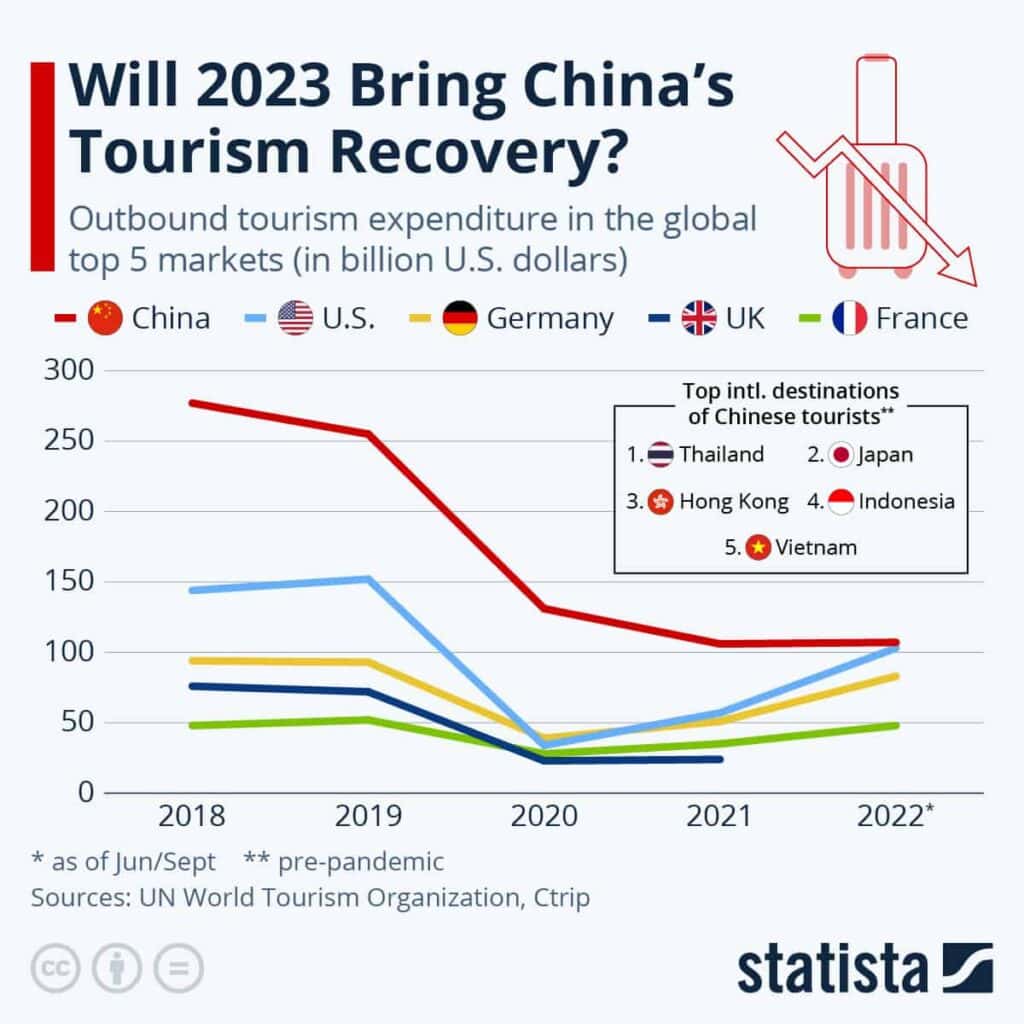
Anticipated trends suggest that Asian countries will likely remain the primary preference for Chinese travelers due to their affordability and convenient accessibility from China.
Nonetheless, there is an emerging trend of an increasing number of Chinese tourists exploring Europe and the United States towards the latter part of the year.
Demographics: Age, Income Levels, and Preferences
A notable portion of Chinese tourists comprises Millennials, characterized by higher disposable income and a heightened inclination towards tailor-made travel encounters, a departure from earlier generations.
Additionally, it’s prudent to factor in senior tourism owing to the swiftly aging populace and the increasing desire among elderly individuals for hassle-free retreats or journeys tailored to their interests, such as photography or golfing. A noteworthy instance is Thailand, which effectively promoted its reasonably priced healthcare offerings alongside captivating vacation destinations, effectively drawing a considerable number of older Chinese travelers in recent times.
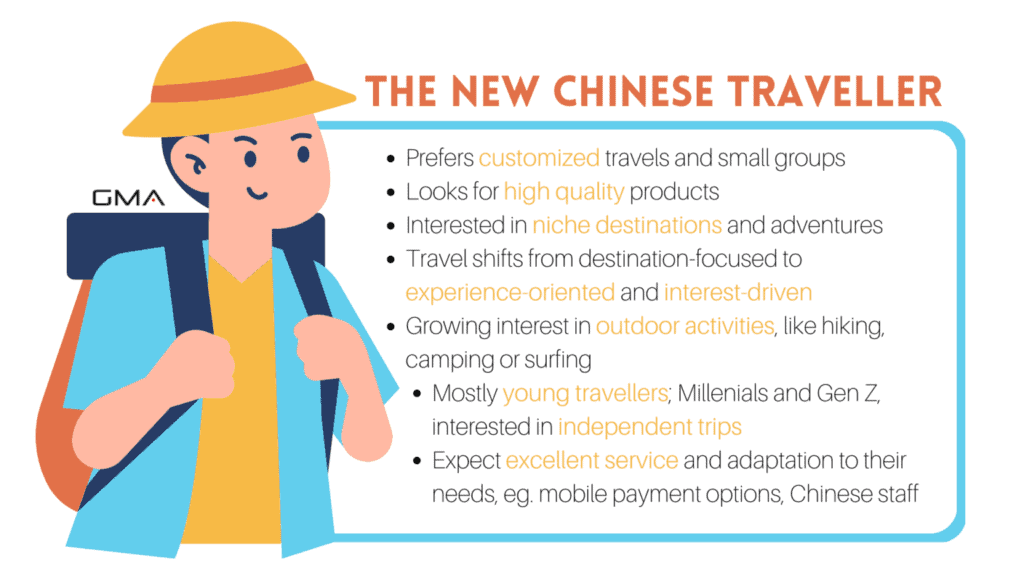
In their way of traveling, Chinese tourists love to travel in groups: they like to have everything taken charge of and organized, and this is why tour guides are very important.
Chinese tourists also prefer to interact with Chinese, so you have to find Chinese partners if you want to reach them. They will trust you more and think this is more convenient
Therefore, as a tourism company, it would be profitable and strategic to make a partnership with these guides. Chinese partners are hard to find and hard to deal with if you don’t know how to do it. So here is how you can find a good Chinese tour partner as a tourism foreign company.

How to Find a Chinese Tour Partner?
A majority of the Chinese population lacks proficiency in English. Even if they possess some English skills, their preference leans heavily toward communicating in their native language.
Furthermore, the employment of emails is not widespread among them, with a strong preference for utilizing WeChat for communication.
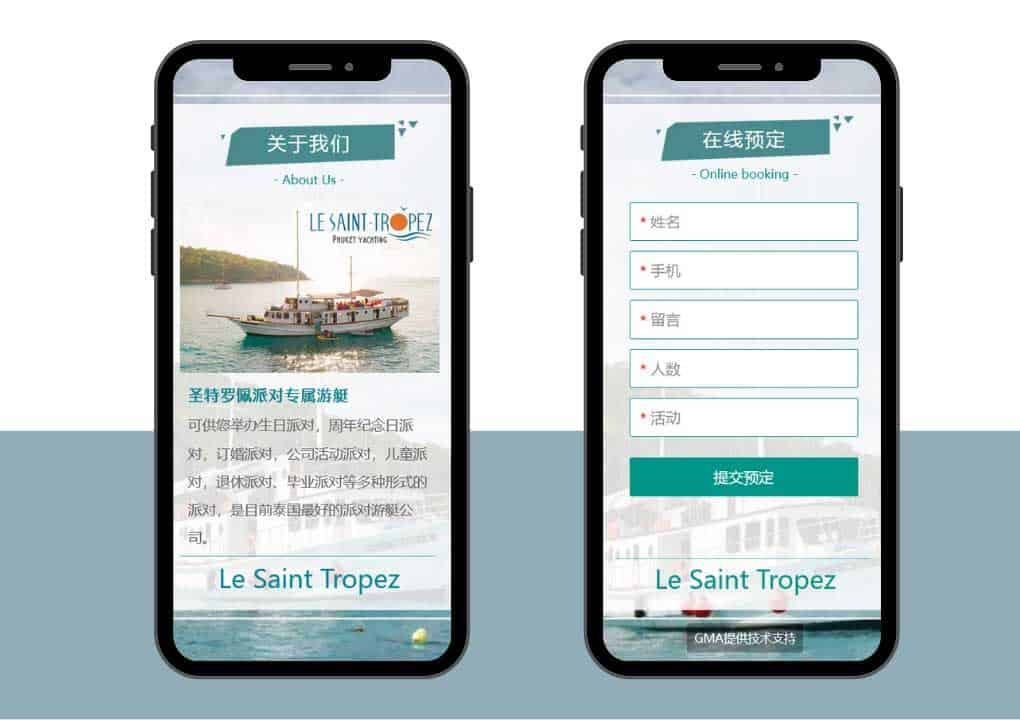
Given that Google is inaccessible in China, individuals typically turn to Baidu for their online searches.
In the realm of social media, China’s restrictions on Facebook, Instagram, and Twitter have led to the prevalent use of homegrown platforms like WeChat, Weibo, and LittleRedBook, to name just a few.
While platforms like TripAdvisor, Booking.com, and Agoda are accessible in China, their usage isn’t as pervasive as their Chinese counterparts. Notably, Mafengwo and Qyer enjoy greater popularity compared to TripAdvisor, while Ctrip and Qunar overshadow the popularity of Booking.com and Agoda.
Unlock Keytool for Chinese Travelers with WeChat
The first one is WeChat, which is the most commonly used social media in China, used for both professional and personal use, in almost any type of business and relationship.
Chinese tour guides must have a WeChat account, in order to communicate with their customers and their partners. Most of the time, they have an Official Account (Service Account or Subscription account), where they post their offers, their updates and keep in contact with their customers and partners.
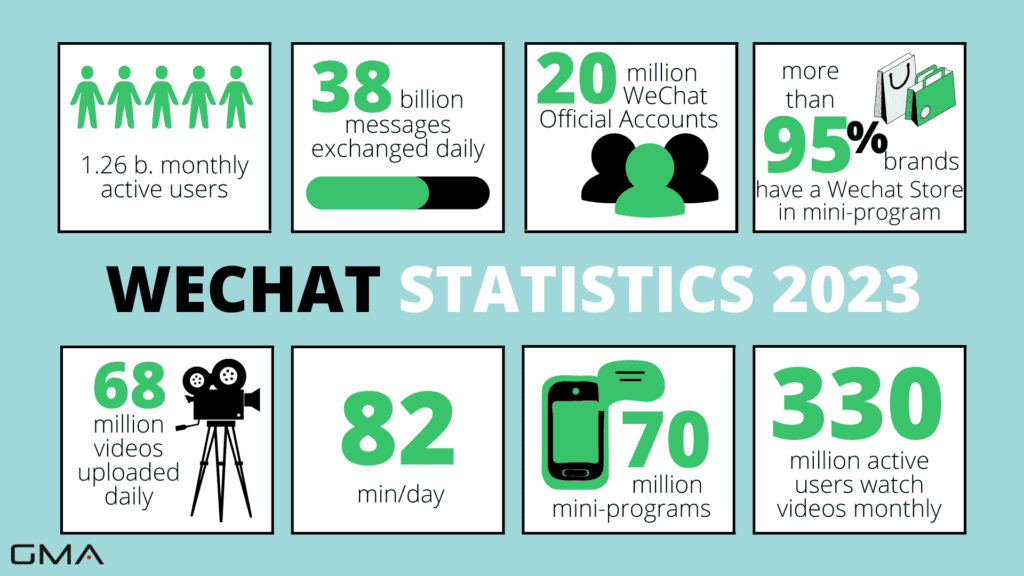
Having a WeChat account is not even an option if you want to work in China: you have to have one. The platform offers many tools which will be useful for your business, such as:
- WechatPay, which will allow the customers to pay directly on the app for your services
- Group Chats, to centralize information and contact your customers and suppliers
- Ads, to promote your services
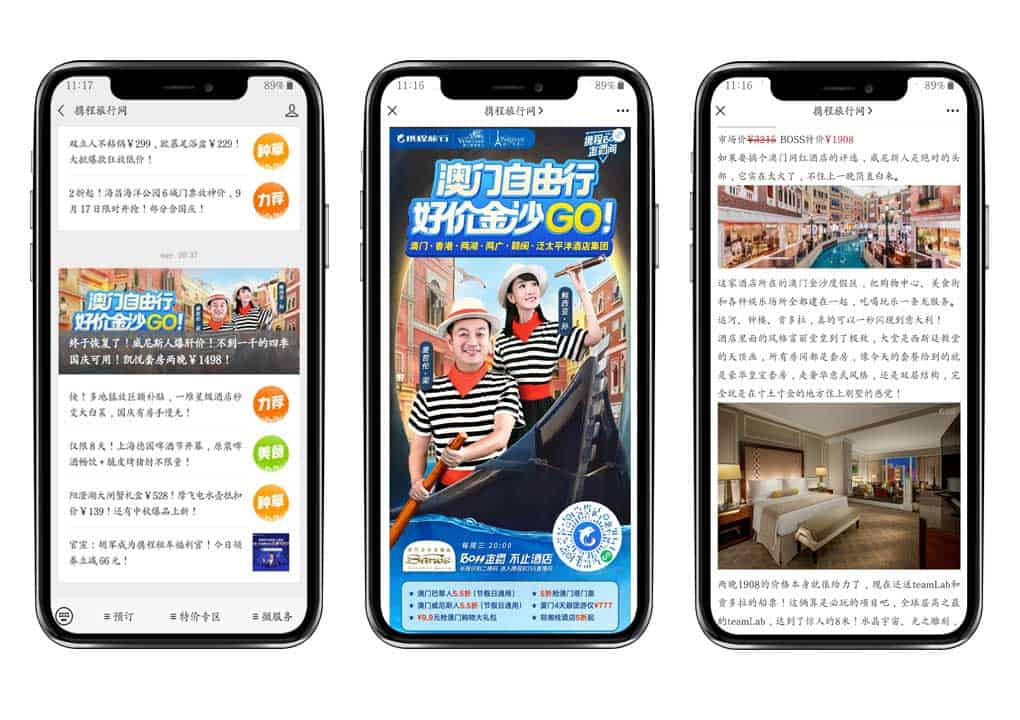
- Official Account, to centralize all information, share the latest news and updates, and also a way for the customers to contact you. When they follow your official account, you can send them H5 brochures which are similar to newsletters. It is a great tool to have information on your customers and to keep them connected to your business.
- Channels are new features of the app, which are to share short videos and can be used to promote your services with KOLs or with your official account.
Of course, we can help you to manage all these tools as your key to entering the Chinese market, feel free to contact us for more insights.
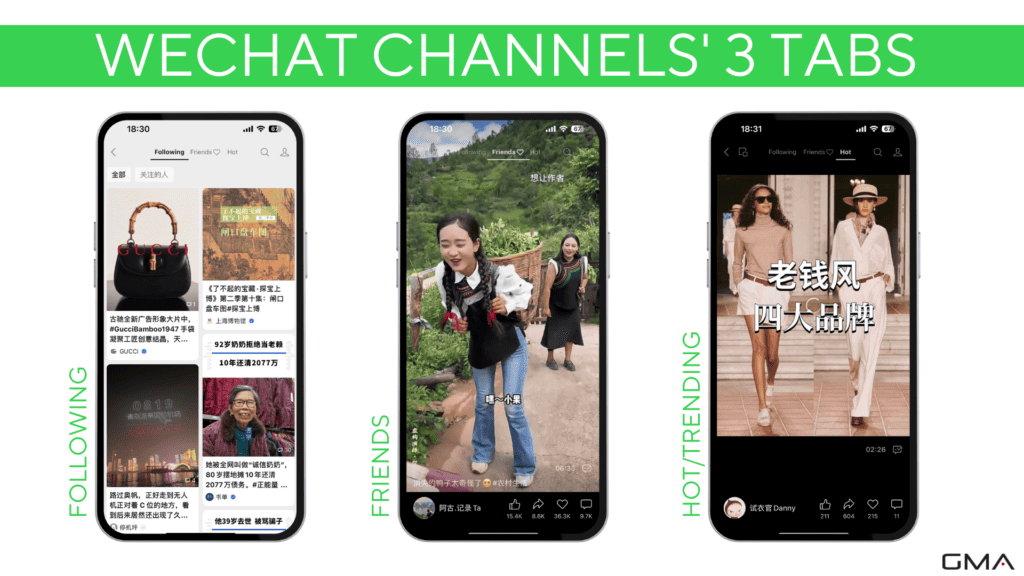
Promote Your Tourism Services on Baidu
On Baidu, you will find their website and more information about them. Baidu is the number one browser in China, so it is the best place to have your website referenced, both for you and for the Chinese tour guide.
Baidu is basically the same as Google or any type of browser, so it is where Chinese customers and suppliers will be able to find your website. Since it is the same as Google, it means that the mechanism and the strategy are similar: it is all about SEO, keywords, and traffic to have your website well ranked and appear on the top of the list of results.
Your website has to be in Chinese since you are targeting Chinese customers and you also have to make sure it is not with Google plugin because otherwise, they will not be able to access it. Above all, your website has to be design according to the Chinese standards, which are not the same as the Western ones. If you need more precision, we can help you with this, to optimize your targeting strategy.
Of course, your website has to be connected to your Wechat official account, so customers and suppliers can easily switch from one to the other, if they need to contact you or if they need more detailed information.
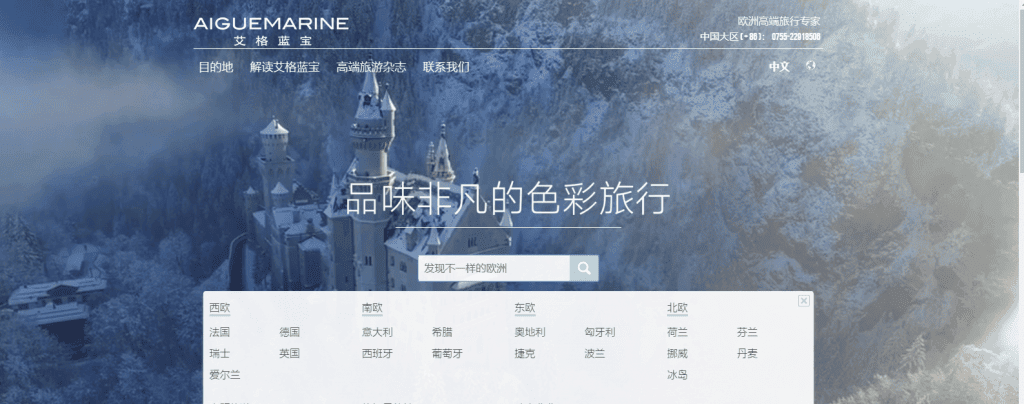
Use Tourism Forums such as Mafengwo
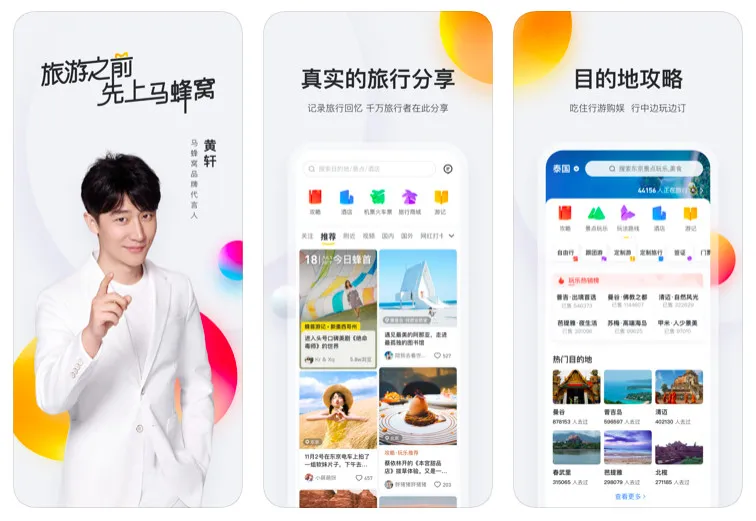
Mafengwo platform is considered as the Chinese Tripadvisor, this is where individuals and KOLs share feedback and give reviews on their experience, as it is very important for Chinese customers. It is also possible to book tours and tickets on the platform so you can easily find partners there and making your choice by checking their ratings.
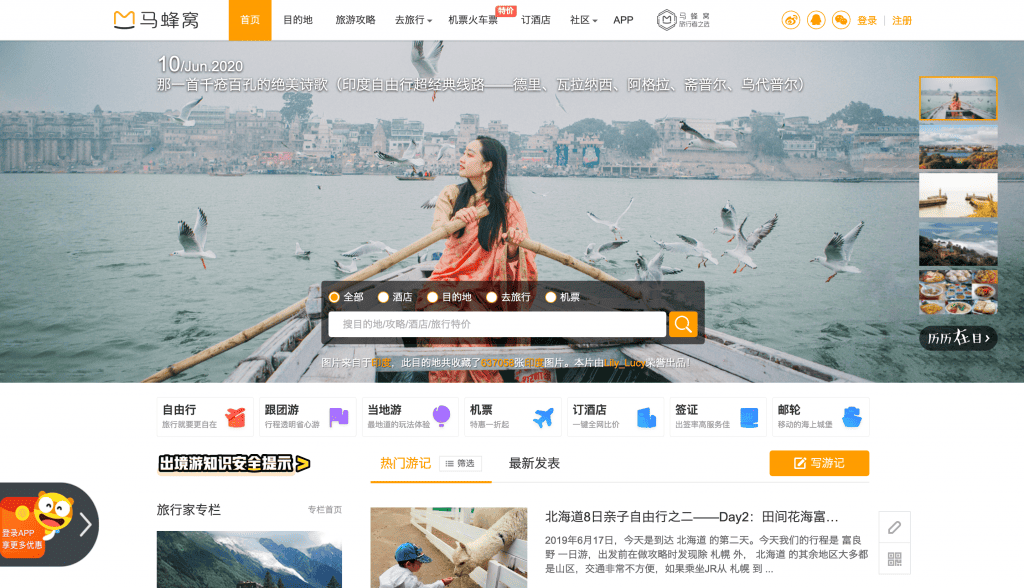
Therefore, this platform can be very good for you to check the trends, see what the Chinese like, and get to know their needs, and wants better. You can find potential Chinese partners on the platform and you can also see how Chinese appreciate your services once you are settled.
It is very important because Chinese customers will rely more on feedback on a community platform like Mafengwo, rather than the one on your website.
Trust is the Base When it Comes to China’s Outbound Tourism
Feedbacks & Reviews
In China, there is a strong culture of rating, reviews, and feedback. The Chinese customer will rely a lot on this information to make their decision to buy or not a ticket or a product, so they will be even more willing to give their feedback on their experience afterward.
Therefore, once you found a list of Chinese tour potential partners, you can easily check their ratings on the various platforms mentioned earlier, and the more feedback it has, the better it should be.
Also, collaborating with a good rated local partner will attract many customers to you, so it is very important to also be rated well, otherwise, they will not accept to collaborate with you.
Labels & Accreditations
The Chine company should be able to provide you with a license and document issued by the authority to prove to you that it is a legal business. You can also check if the company has some accreditations such as the ASTA (American Society of Travel Agents), which is the world’s largest association of travel professionals, or the PATA (Pacific Asia Travel Association) which is the major accreditation and authority in this region.
There is also the CNTO (China National Tourism Administration) which is mainly for tours in mainland China for foreigners.
However, it can be very easy to have fake licenses and accreditations so make sure to check their accreditation number, having the logo displayed on the website is not enough.

Challenges of Working with a Chinese Partner
Obviously, the most common issue would be to get scammed by your partner but it’s important to remember that you can easily check if your potential partner is going to be reliable or not, by checking the reviews (issues of non-respect of the planning, delays of payments, lack of quality…). Besides this, as a foreign company, you might struggle to interact with the Chinese tour guide for many reasons:
- barrier of language
- culture difference
- different communication tools
In that sense, it is better to be able to speak Chinese in order to avoid any misunderstanding, and also you have to know the Chinese culture in order to satisfy the clients as much as possible.
Indeed, tours and taking pictures of famous places are the main focus of the travel experience for Chinese, while for Western it would be more about providing a unique experience off-road. There is no problem for Chinese travelers to have the exact same experience as thousands of people, as long as it is at least as good as expected.
Tailoring Success: Your Roadmap to Engaging Chinese Travelers
In conclusion, the intricate landscape of the Chinese tourist market demands a nuanced approach to engagement. Being attuned to demographics, linguistic inclinations, communication platforms, and digital behaviors is paramount for effectively reaching Chinese travelers. As preferences lean towards native language communication and platforms like WeChat and Baidu, tailoring your strategies can unlock remarkable opportunities.
Should you seek to establish a robust partnership with a Chinese tour guide, contact GMA (Gentlemen Marketing Agency). With a profound marketing legacy, we’ve empowered over 300 tourism entities to navigate the Chinese market successfully. Our expertise is at your disposal, ready to provide insightful advice that enables you to seamlessly navigate the intricacies of the Chinese tourism landscape.

For personalized assistance and guidance, please don’t hesitate to contact us. We’re here to help you unlock the full potential of connecting with the vast and dynamic audience of Chinese travelers.







Need assistance from China to establish a new track in SARAWAGET range in PNG, Morobe province in Kabwum.
We want to tap into:
1: trekking route
2: conservation
3: carbon trade